
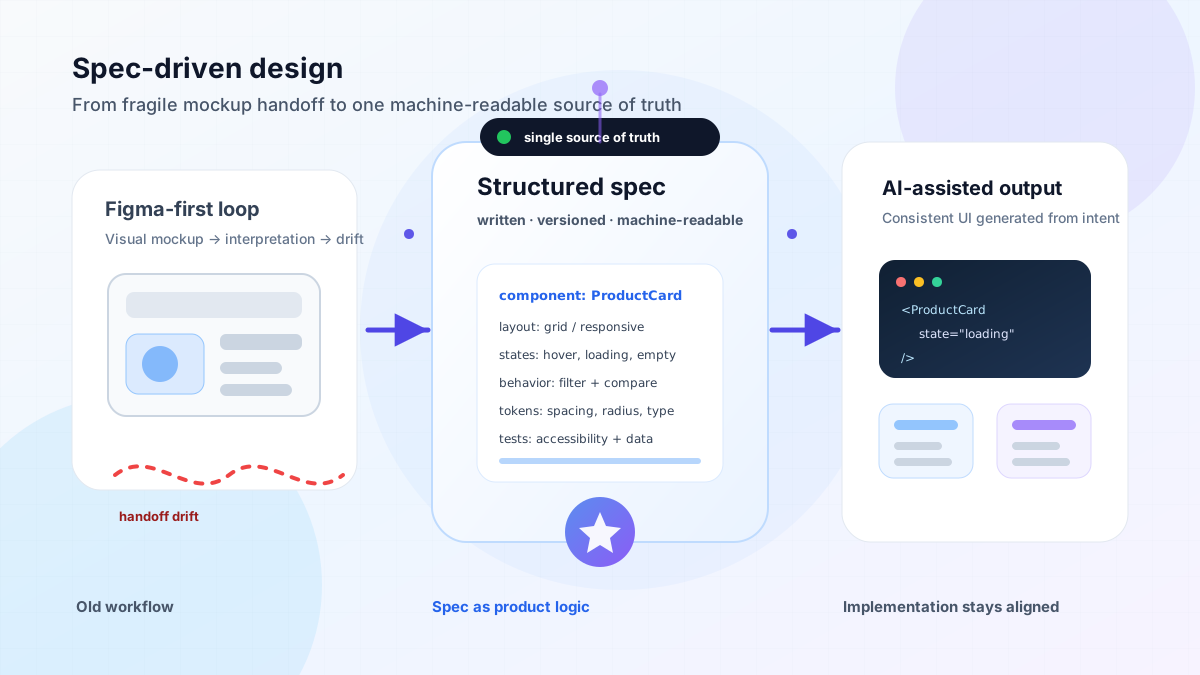
The Figma-first design workflow has dominated product teams for nearly a decade. A designer produces pixel-perfect mockups, a developer interprets them, the handoff creates drift and the cycle repeats. It is a process optimised for the limitations of the tools available at the time — not for how software is actually reasoned about and built.
Claude's approach to design is changing the underlying assumption. Instead of treating a visual tool as the source of truth, the emerging pattern centres on a structured spec document: written, versioned, machine-readable and directly usable by an AI coding assistant. The spec describes intent — layout, behaviour, component state, interaction logic — and the implementation follows from it, consistently, across every output.
The consequences for product teams are real. Drift between design and implementation shrinks because both are derived from the same source. Iteration cycles compress because updating the spec propagates changes rather than triggering a new round of Figma-to-code translation. Junior developers can execute to a higher standard because the spec provides the reasoning, not just the visual reference.
This does not make design thinking less important — it makes it more so. The work moves upstream: into the clarity and precision of the spec itself, into the decisions about what a component should do and why, into the architecture of a design system that an AI can reliably follow. The craft shifts from pixels to logic.
For teams delivering complex enterprise software — where consistency across dozens of views and states is the actual challenge — this is a meaningful change in how the work gets done. Svapna has been incorporating spec-driven design into our delivery process, and the efficiency gains are measurable. The conversation is no longer about whether AI can assist with design. It is about how quickly your team can build the discipline to use it well.